
Reviews
Description
Steering Through a Cube-Filled Void
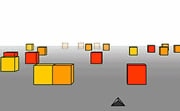
Cubefield Reflex Arcade Runner drops you into the cockpit of a small ship navigating a three-dimensional field of cubes. Your only job is to keep flying. The game tracks how far you travel, and every run ends the moment you collide with an obstacle. That single rule shapes everything: you are always looking ahead, reading the gaps between cubes, and making small adjustments before the next cluster arrives.
Controls and the Pace Curve
Steering uses directional controls, typically the left and right arrow keys. The opening stretch runs at a gentle pace, giving you room to learn how the ship responds and how the cube field is laid out. That calm does not last. Speed climbs, corridors narrow, and the visual presentation shifts to keep the environment from feeling static. The result is a difficulty curve that starts forgiving and becomes demanding without a hard break between stages.
Why Runs Stay Tense
Because the game is endless, there is no final level to reach. Progress is measured in distance and personal bests. Tighter gaps and faster movement mean the same controls that felt easy at the start require precise timing later on. A pause function lets you step away mid-run, which is useful when a session stretches longer than expected. The combination of simple inputs and escalating pressure is what keeps repeated attempts meaningful.
Reading the Field
Success comes from anticipation rather than reaction alone. Cube placement forms patterns you can learn over time, and steady, controlled movement tends to work better than sharp corrections. Staying calm as speed increases helps you spot openings earlier. Short breaks between long sessions can also protect concentration, since fatigue shows up quickly in a game that punishes a single mistimed input.
Compatibility
Player Comments
Sign in to comment
You must be logged in before posting a review or rating.
No comments yet. Be the first to comment!






Editorial Notes