
Reviews
Description
Piece Control and Placement
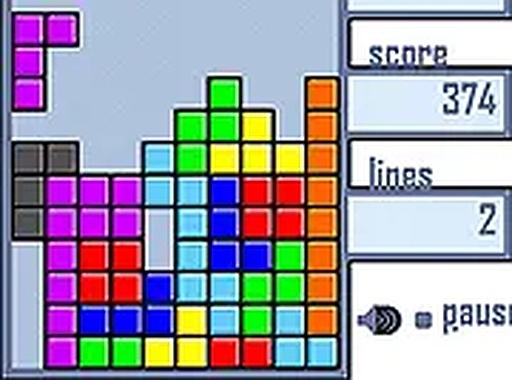
Each falling piece consists of four connected squares. You rotate and shift it left or right before it lands, deciding where it fits into the existing stack. The goal is to form complete horizontal lines. When a line fills, it disappears, points are awarded, and the space above opens up. Because every placement changes the shape of the pile, the order of your decisions matters as much as the speed of your hands.
Rising Speed and Difficulty
The game opens at a manageable pace, giving new players room to learn rotation and placement without immediate pressure. As you clear more lines, the pieces descend faster. This gradual acceleration creates a difficulty curve that rewards practice: the same mechanics that felt comfortable early demand quicker judgment later. There is no final level; the challenge continues until the stack reaches the top.
Minimalist Presentation and Controls
The interface keeps attention on the play area. Blocks use distinct colors so each shape is easy to identify at a glance. Controls are straightforward, typically arrow keys or on-screen buttons for movement and rotation. No account creation or installation is required, and the game runs directly in a browser. That simplicity means a session can start in seconds and last as long as you want.
Planning Ahead for Better Scores
Quick reflexes alone will not carry you far. Keeping the stack low and even reduces the risk of topping out. Clearing several lines at once yields bonus points, which encourages building flat surfaces rather than filling gaps one at a time. Experienced players develop their own habits for handling awkward pieces and for deciding when to sacrifice height for a larger clear.
Compatibility
Player Comments
Sign in to comment
You must be logged in before posting a review or rating.
No comments yet. Be the first to comment!









Editorial Notes