
Reviews
Description
Core Parking Mechanics
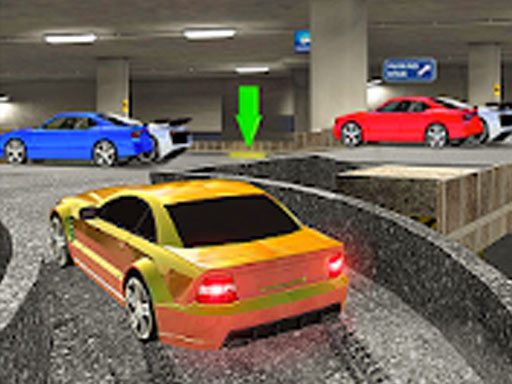
Precision Parking 3D Challenge hands players a vehicle and a marked space, then asks them to close the gap without clipping an obstacle. Steering, acceleration, and braking are the only tools, so every successful park comes down to smooth inputs and a planned path. The 3D environment matters here: depth perception and camera choice directly affect how confidently a player judges distance and alignment.
Scenario Progression
Difficulty scales across scenarios rather than staying flat. Early tasks lean toward straightforward straight-in parking, while later ones move into tighter spaces and more complex layouts such as parallel parking. That curve gives new players room to build confidence before the margins shrink. Visual cues like arrows or guides, when present, help with alignment but do not remove the need to read the space.
Controls, Cameras, and Feedback
Controls are designed to feel responsive, which matters when a few centimeters decide success. Multiple camera angles are a common part of the genre and let players check blind spots from different perspectives. Collisions typically restart the level, so the feedback loop is immediate and unforgiving in a controlled way. A timer or accuracy-based scoring system may shape how aggressively a player approaches each attempt.
Who It Suits
This is a low-pressure way to practice spatial awareness and vehicle control in a virtual setting. The arcade framing keeps sessions light, while the realistic elements add a sense of authenticity. Players who enjoy precision tasks, or who simply want to sharpen parking instincts without real-world risk, are the natural audience. [IMG_1]
Compatibility
Player Comments
Sign in to comment
You must be logged in before posting a review or rating.
No comments yet. Be the first to comment!









Editorial Notes