
Reviews
Description
Core Objective and Moment-to-Moment Play
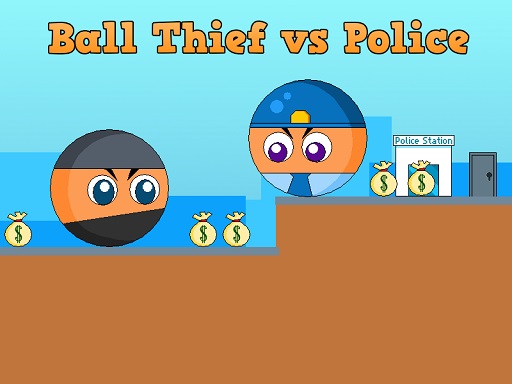
In Coin Collector Adventure, each level presents a straightforward goal: collect every bag of coins scattered across the stage and then reach the exit. The challenge comes from patrolling guards and fixed obstacles that punish careless movement. Touching a guard or trap costs one life, and you begin with only a small number of lives. That scarcity forces you to treat every jump and dash as a decision rather than a reflex. [IMG_1]
Reading Guard Patterns and Planning Routes
Guards move along set paths, so observation is as important as timing. Before grabbing the nearest coin bag, you need to watch how guards cycle through their routes and identify gaps in their coverage. Safer coins can be collected early, while riskier ones often require waiting for a guard to turn away. Obstacles double as cover, letting you pause and reassess without being seen. The game rewards patience over speed, and hasty moves usually cost a life.
Progression and Rising Difficulty
As you advance, levels introduce faster guards and more frequent obstacles. The core loop stays the same, but the margin for error shrinks. Early stages teach you to read patrol patterns; later ones combine multiple guards and tighter spaces, demanding that you chain your movements precisely. Because each level is designed for short sessions, you can retry a stage repeatedly to memorize trap locations and guard timings. [IMG_2]
Controls and Accessibility
Movement uses standard left, right, and jump inputs, so new players can start quickly. The simple control scheme keeps the focus on planning and observation rather than complex inputs. Colorful graphics and smooth animations make the experience visually clear, helping you track guards and coins without confusion. The family-friendly presentation suits players of all ages, and the short level structure fits well into brief play sessions.
Compatibility
Player Comments
Sign in to comment
You must be logged in before posting a review or rating.
No comments yet. Be the first to comment!










Editorial Notes