
Reviews
Description
One-Button Precision
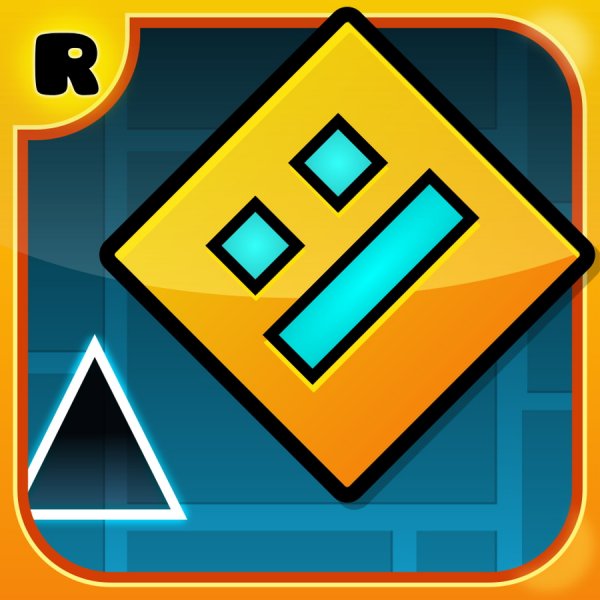
Geometry Dash Rhythm Platformer runs on a single input: tap or click to jump. The cube never stops moving, so every obstacle demands a correctly timed press. Spikes, blocks, and saws end the run on contact, and there is no way to slow down or adjust mid-air. That constraint is the whole design. Because you cannot steer, success depends on reading the level ahead and reacting at the exact moment the music and the layout align.
Music as a Level Map
The soundtrack is not background decoration. Each level pairs its obstacles with an original track, and the rhythm often cues what is coming. A beat drop may signal a cluster of spikes; a quieter passage may leave room for a single jump. Players who listen rather than only watch tend to anticipate hazards earlier. The cube can also pass through rings and pads that change its trajectory or add height, which shifts the timing window and keeps the beat-to-action relationship from becoming purely mechanical.
Forms, Modes, and Progression
As a level advances, the cube may transform into different forms, each with its own movement rules. A new form means relearning the jump cadence mid-run, so transitions act as built-in difficulty spikes. Standard mode sends you back to the start after a mistake. Practice Mode places checkpoints so you can rehearse a specific section without replaying the whole stage. The level list rises in difficulty, and the one-button scheme stays constant, which is why the learning curve feels gentle at first and steep later. [IMG_1]
Who This Suits
Players who enjoy reflex-driven arcade games and rhythm timing will find a clear feedback loop: fail, identify the mistimed jump, retry. Those who prefer exploration or narrative will find little here, since the game is built around repetition and precision. The combination of automatic movement and musical cues makes it a focused test of concentration rather than a casual stroll.
Compatibility
Player Comments
Sign in to comment
You must be logged in before posting a review or rating.
No comments yet. Be the first to comment!








Editorial Notes